

Archives | Contact Us | Columbian Publishing Company | e-Edition | Mobile | Place an Ad | RSS | Subscribe

    Digg Stumble Upon  Reddit  twitter    del.icio.us

Local News

Washougal's carbon footprint measures up


City is 'not sustainable' but it's getting closer

Saturday, July 11 | 10:26 p.m.

BY ERIK ROBINSON
COLUMBIAN STAFF WRITER

WASHOUGAL — At first glance, this small Columbia River city doesn't appear to share much with New York.

Washougal's entire population, of going on 14,000, could fit inside New York's Madison Square Garden with room to spare, but the two cities are among just 18 nationwide to take part in a test of their environmental bona fides. And Washougal stacks up just fine.

"We're not sustainable," said city administrator Nabiel Shawa. "But we're making improvements."

The assessment was underwritten by the international nonprofit Carbon Disclosure Project, a group of investors compiling the largest database of greenhouse gas emissions worldwide. Alarmed by the buildup of heat-trapping gases in the atmosphere, officials from the 18 participating cities took the first step toward reducing their carbon footprints by measuring them.

Washougal, which was among the smallest cities participating, had the smallest footprint.

The project measured direct emissions, such as auto exhaust from patrol cars and street sweepers. It also took account of the source of electricity. Washougal benefitted from the fact that Clark Public Utilities draws much of its power supply from the Northwest's abundant network of carbon-free hydroelectric dams.

Bottom line: Washougal city government spews an estimated 2,362 metric tons of greenhouse gases annually.

New York City, powered largely by coal-burning power plants and serving about 600 times as many residents, emits almost 4.3 million metric tons — about three times as much per resident as Washougal and four times the emissions calculated for the next-highest emitter, Chicago.

Washougal spent $5,000 for a consultant who compiled the raw data and submitted them to the CDP, Shawa said.

He cited three reasons for the city's participation: Curiosity, reality and opportunity.

The U.S. House of Representatives approved a bill last month to establish a cap-and-trade system for reducing carbon emissions. Although the legislation has yet to pass the Senate, Shawa said the handwriting is on the wall.

"There is no question in our mind that every city in the nation is going to have to reduce their carbon emissions," he said.

The city is also hoping to capitalize on the economic cachet of environmental sustainability.

"If we pursue sustainability, and do it correctly, we are likely to attract like-minded businesses to our area," Shawa said.

City officials believe they've already had some success in that regard.

Shawa said three clean-technology companies — iCooper, NCS Power and 3E — have either located to Washougal or pledged to do so. NCS, he said, has indicated it may establish a factory in which 400 to 500 people would be employed to produce energy-efficient lights.

The city isn't taking radical steps.

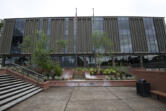
Outside City Hall, Shawa pointed out a newly planted vine trained to climb a series of wires running up to the roof line of the 32-year-old building. The vine will shade the window in the summer, reducing the need for air conditioning, and die back in the winter, allowing the sun to warm it.

"It's the little stuff," he said. "It's not earth-shaking."

Erik Robinson: 36-735-4551, or erik.robinson@columbian.com.


On the Web:

See the Cities Project 2008 Report (pdf) at
cdproject.net/reports.asp.
Copyright 2009 columbian.com. All rights reserved. Use of this site constitutes acceptance of our user agreement.